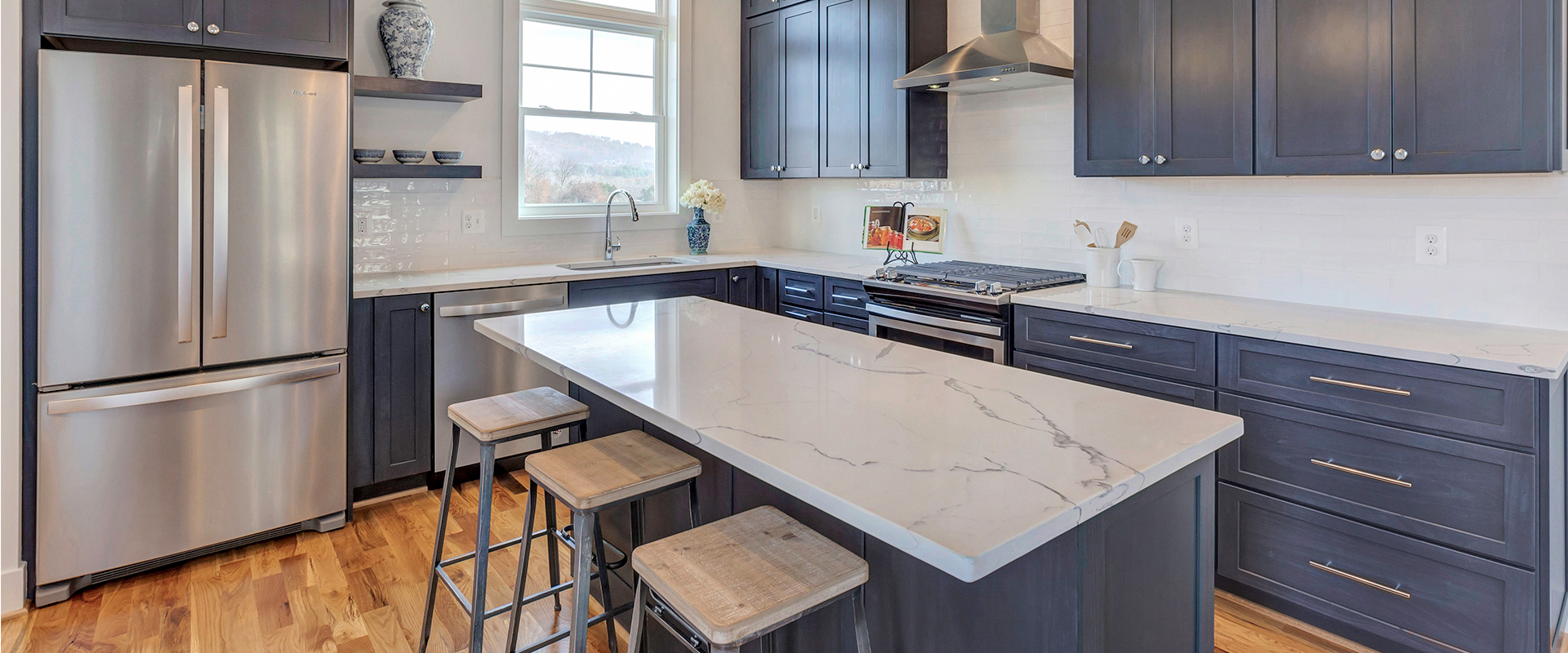
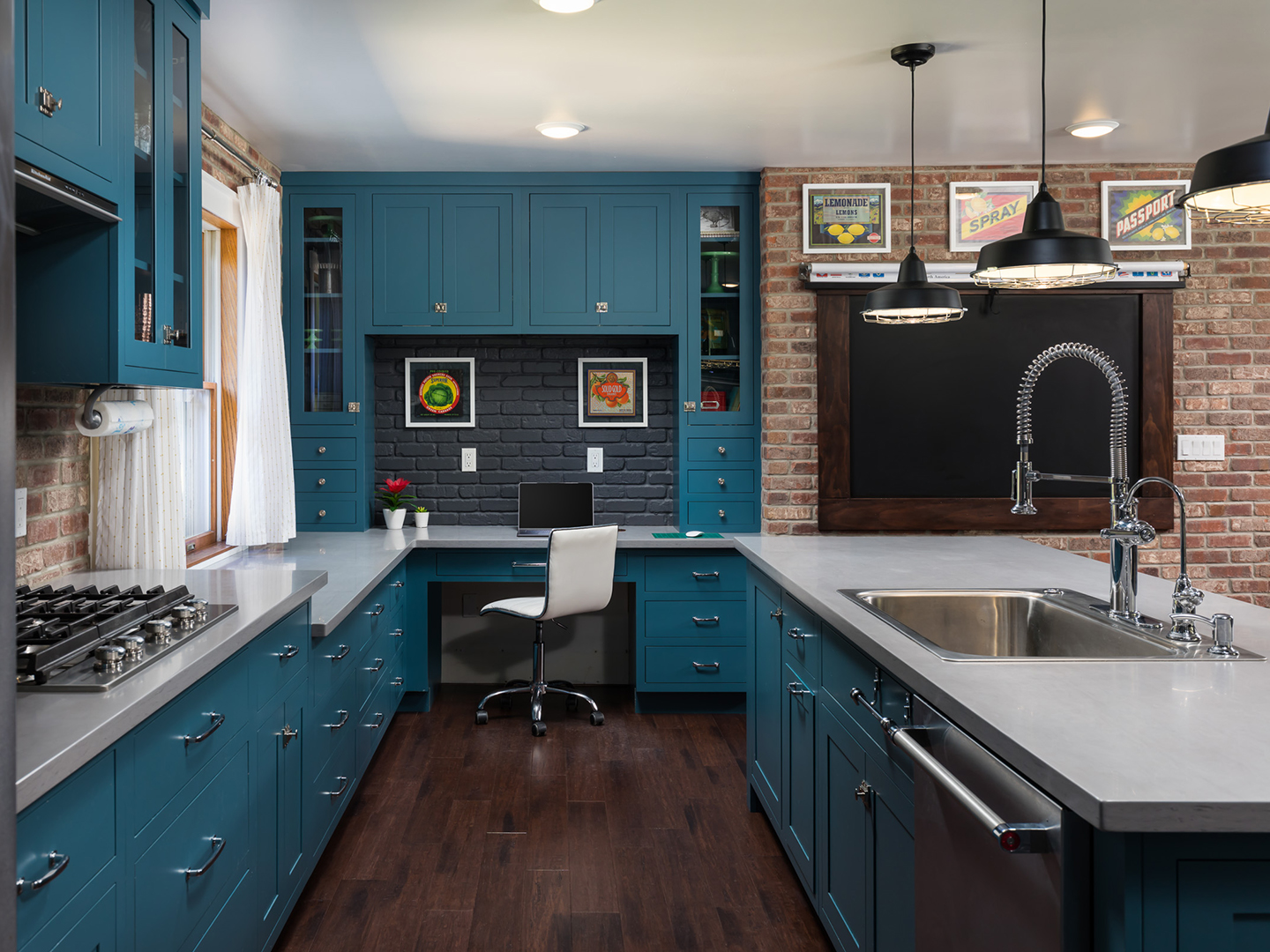
Quartz vs Porcelain Slabs: Which Surface Is Right for Your Project?

When researching slab surfaces for kitchens or bathrooms, many homeowners compare quartz and porcelain.
Both materials are popular. Both offer clean, modern ae
But they are not the same.
If you are deciding between quartz vs porcelain slabs, understanding the differences in composition, durability, maintenance, and application will help you make a confident choice.
At Freedom Cabinets, we sell quartz countertops only, including selections from MSI, Cambria Quartz, ENVI, and LaVenta Quartz. Let’s walk through how quartz compares to porcelain and where each surface is commonly used.
What Is Quartz?
Quartz countertops are engineered surfaces made from natural quartz combined with resins and pigments.
This manufacturing process creates a nonporous slab with consistent patterning and controlled veining.
Quartz is widely used for:
- Kitchen countertops
- Kitchen islands
- Bathroom vanities
- Backsplashes
Because quartz is engineered, color consistency and pattern repetition are more predictable than many natural stone options.
What Are Porcelain Slabs?
Porcelain slabs are made from refined clay and natural minerals fired at very high temperatures.
They are often manufactured in thinner formats and are commonly used for:
- Shower walls
- Wall cladding
- Large-format tile installations
- Some countertop applications
Porcelain is known for being lightweight and highly resistant to heat and UV exposure.
Quartz vs Porcelain Slabs: Side-by-Side Comparison
| Feature | Quartz | Porcelain Slabs |
|---|---|---|
| Composition | Engineered stone with resins | Fired clay and minerals |
| Thickness Options | Commonly 2cm and 3cm | Often thinner formats |
| Pattern Consistency | Controlled and repeatable | Printed or digital patterns |
| Heat Resistance | Heat resistant but not heatproof | Highly heat resistant |
| UV Resistance | Not typically recommended for outdoor UV exposure | Suitable for some outdoor applications |
| Common Use | Kitchen countertops and islands | Shower walls and wall cladding |
Both materials are durable, but they perform differently depending on the application.
Durability Differences
Quartz is designed for everyday residential kitchen use. It resists moisture and typical household spills when properly maintained. Its nonporous surface does not require sealing.
Porcelain is also durable and highly heat resistant. Because of its manufacturing process, it can handle high temperatures and UV exposure better than quartz in certain outdoor applications.
For indoor kitchens, quartz remains one of the most widely selected countertop materials.
Thickness and Structural Feel
Quartz slabs are commonly available in 2cm and 3cm thicknesses. The thicker 3cm format provides a substantial edge profile and solid presence, especially for kitchen islands.
Porcelain slabs are often thinner. While this makes them lighter, it also changes the visual profile. Some homeowners prefer the thicker, more solid look that quartz provides.
When planning kitchen countertops, thickness often influences the final appearance more than expected.
Pattern and Appearance
Quartz offers controlled veining and color consistency across slabs. Brands such as MSI, Cambria Quartz, ENVI, and LaVenta Quartz provide a wide range of marble-inspired and contemporary designs.
Porcelain slabs often use printed patterns to replicate natural stone. While many designs look realistic, pattern repetition can sometimes be noticeable across large surfaces.
Seeing slab samples in person is the best way to evaluate movement and scale.
Maintenance Considerations
Quartz does not require sealing and can be cleaned with mild soap and water under normal use.
Porcelain also offers low maintenance and stain resistance.
For indoor kitchen environments, quartz remains one of the most commonly selected low-maintenance surfaces.
Indoor vs Outdoor Use
One key difference is UV resistance.
Porcelain is generally more suitable for exterior applications because it resists fading in direct sunlight.
Quartz is primarily intended for indoor residential use and is not typically recommended for prolonged outdoor UV exposure.
If you are planning an indoor kitchen remodel, quartz remains a strong and widely selected option.
Which Surface Is Right for You?
The decision depends on your project.
If you are focusing on:
- Kitchen countertops
- Large kitchen islands
- Coordinated cabinet and countertop selections
- 2cm or 3cm slab thickness options
Quartz is one of the most popular choices.
Freedom Cabinets offers quartz surfaces from MSI, Cambria Quartz, ENVI, and LaVenta Quartz so homeowners can compare finishes and thickness options in person.
Frequently Asked Questions
Is quartz better than porcelain for kitchen countertops?
Both materials are durable, but quartz is widely selected for indoor kitchen countertops due to its thickness options and consistent appearance.
Can porcelain slabs be used for shower walls?
Yes. Porcelain slabs are commonly used for shower walls and vertical applications.
Does quartz require sealing?
No. Quartz countertops do not require sealing.
Is porcelain more heat resistant than quartz?
Porcelain is generally more heat resistant due to its high-temperature manufacturing process. However, protective practices are recommended for all countertop materials.
Does Freedom Cabinets sell porcelain slabs?
No. Freedom Cabinets sells quartz countertops only, including MSI, Cambria Quartz, ENVI, and LaVenta Quartz.
Explore Quartz Countertop Options at Freedom Cabinets
If you are comparing slab surfaces for your kitchen project, reviewing quartz options in person can help clarify your decision.
Freedom Cabinets offers quartz countertops from MSI, Cambria Quartz, ENVI, and LaVenta Quartz so you can compare pattern, thickness, and finish in one location.
Visit one of our showroom locations:
North Royalton
10143 Royalton Rd. Unit D
North Royalton, OH 44133
Hudson
5115 Hudson Dr.
Hudson, Ohio 44236
Stop in to explore quartz slab selections and determine which surface fits your kitchen goals.
RECENT POSTS